Kristen Meghan Kelly Presents
Noise that never stops. Chemicals in your water. Plummeting property values. Here is what Big Tech doesn't want you to know about the data centers being built in your neighborhood.
The Problem: America's Data Center Crisis
Data centers are massive warehouses filled with servers, cooling systems, and power equipment running 24 hours a day. They power everything from AI chatbots and cloud storage to streaming services and military surveillance systems. A single hyperscale AI data center uses as much electricity as 100,000 homes and requires millions of gallons of water daily just to stay cool.
The United States hosts 45% of all data centers on Earth — 5,427 facilities as of late 2025. Tech giants are spending over $700 billion on new data center infrastructure in 2026 alone. And they're building them in communities just like yours — often using secret NDAs to hide their plans from the public until it's too late.
Communities across the country are fighting back. In 2025, $156 billion worth of data center projects were blocked or delayed by local opposition. Opposition rose 125% in a single quarter. Nearly half of all Americans now say they don't want a data center in their neighborhood.
Electricity consumed in 2024 — enough to power 16 million homes. Americans paid 10% more for electricity.
Temperature increase near data center campuses. The 'Data Heat Island Effect' impacts 343 million people globally.
New data centers planned for the Great Lakes region — threatening the world's largest freshwater reserve.
Health Concerns: What Living Near a Data Center Does to You
Peer-reviewed research has documented serious health impacts. These are not theoretical — they are being reported by real communities right now.

Sleep Disturbance
The constant low-frequency hum runs 24/7 and penetrates walls. Standard earplugs offer little relief.
Headaches & Vertigo
Persistent headaches, dizziness, and nausea linked to continuous noise and vibration exposure.
Chronic Stress & Hypertension
Inescapable noise triggers the body's stress response. Elevated blood pressure documented.
Respiratory Disease
Diesel generators emit toxic exhaust classified as carcinogenic. Linked to asthma and premature death.
Ear Pain & Pressure
Strange pressure in ears or chest — not just hearing the sound, but physically feeling it.
Reduced Quality of Life
Property values drop. Families are forced to move. Daily life is severely degraded.
"Data center neighbors have reported headaches, vertigo, nausea, sleep disturbances, ear pain, and hypertension."
PFAS & Chemical Contamination
Data centers don't just make noise — they leave behind a toxic chemical legacy. The cooling systems use PFAS (per- and polyfluoroalkyl substances), commonly known as "forever chemicals" because they never break down in the environment.
These chemicals leach into groundwater and contaminate drinking water supplies. In North Carolina, airborne PFAS emissions contaminated more than 7,000 drinking water wells.
What Are PFAS 'Forever Chemicals'?
PFAS are a class of over 12,000 synthetic chemicals used in data center cooling systems. They never break down — they accumulate in soil, water, and human blood indefinitely.
Health effects: Cancer (kidney, testicular), thyroid disease, liver damage, immune system suppression, reproductive problems, and developmental delays in children.
Diesel Emissions: The Other Invisible Threat
Every data center maintains banks of diesel backup generators. The International Agency for Research on Cancer classifies diesel exhaust as a Group 1 carcinogen — the same category as asbestos and tobacco smoke.
Water Contamination from Cooling Systems
Evaporative cooling systems leave behind high concentrations of salts, biocides, and chemical contaminants. A single hyperscale facility can consume and contaminate up to 5 million gallons of water per day — equivalent to a city of 50,000 people.
The Noise: A 24/7 Assault on Your Home
Data centers produce a deep, constant, low-frequency hum that standard noise tests fail to detect. It never stops. It goes through walls. And it's making people sick.
Cooling Towers
63–500 Hz
Massive water-cooling systems producing broadband noise with tonal components.
HVAC Systems
31.5–250 Hz
Industrial-scale air conditioning running continuously — a steady-state hum.
Industrial Fans
63–500 Hz
Large exhaust fans with blade-pass frequencies creating rhythmic, tonal noise.
Transformers
100–300 Hz
Electrical transformers humming at harmonics of 60 Hz — a pure tonal drone.
Backup Generators
31.5–250 Hz
Diesel generators producing deep, low-frequency rumble during testing and outages.
Structure-Borne Vibration
16–63 Hz
Vibration transmitted through the ground into your home's foundation.
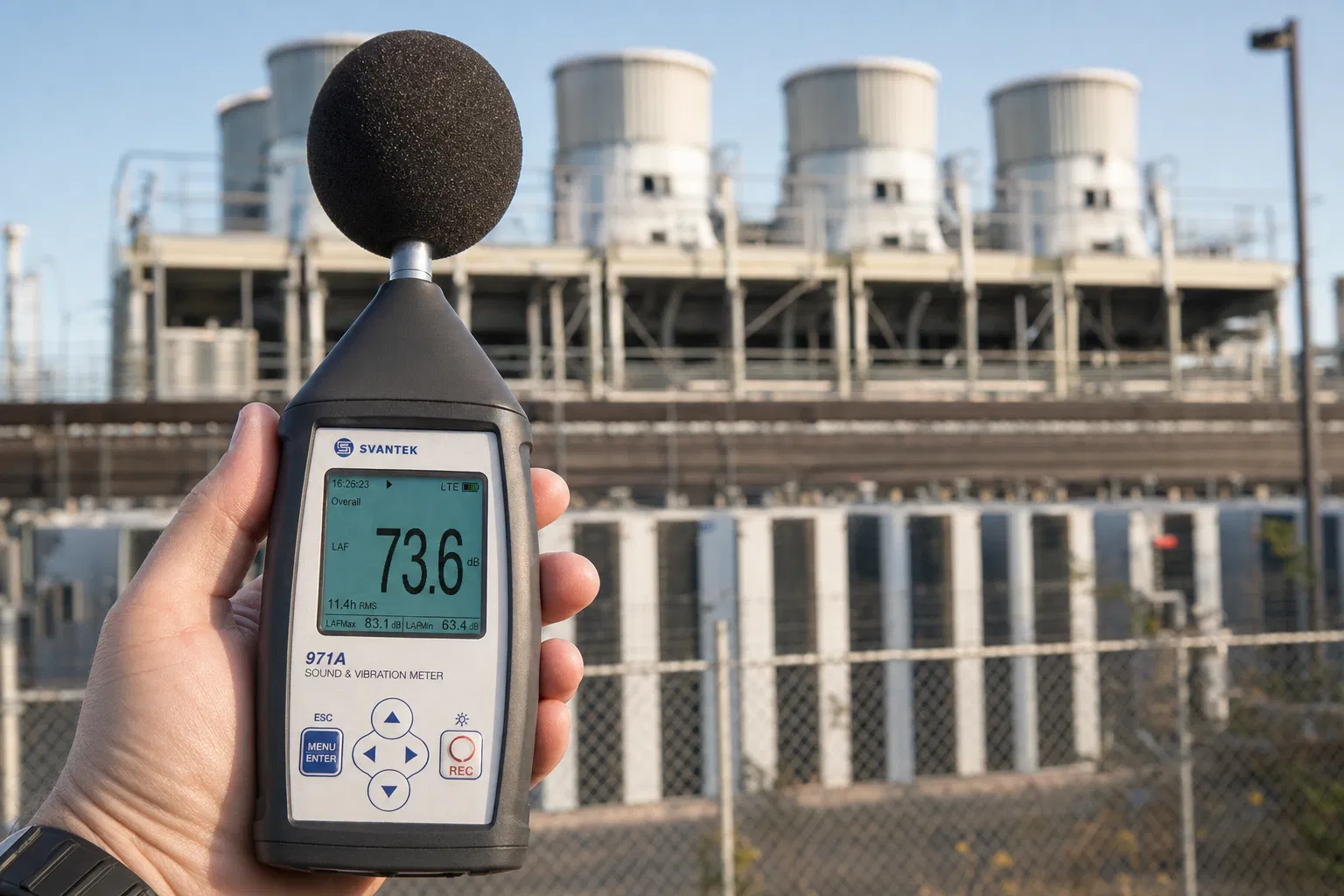
Why Standard Tests Miss It
Most noise regulations use dBA, which reduces low-frequency sounds by up to 50+ decibels — making them invisible on paper.
A powerful 80 dB tone at 31.5 Hz registers as only 41 dBA — seemingly quiet, even though you can feel it shaking your walls.
When dBC − dBA exceeds 10 dB, it's a recognized indicator of significant low-frequency noise — but most ordinances don't require this measurement.
Hear It For Yourself
Datacenters Behaving Like Acoustic Weapons — Benn Jordan
South Jersey Residents: AI Data Center Noise
Mount Pleasant, WI: Microsoft AI Data Center
Growing Concerns in Northern Virginia
Community Stories: Neighbors Speak Out
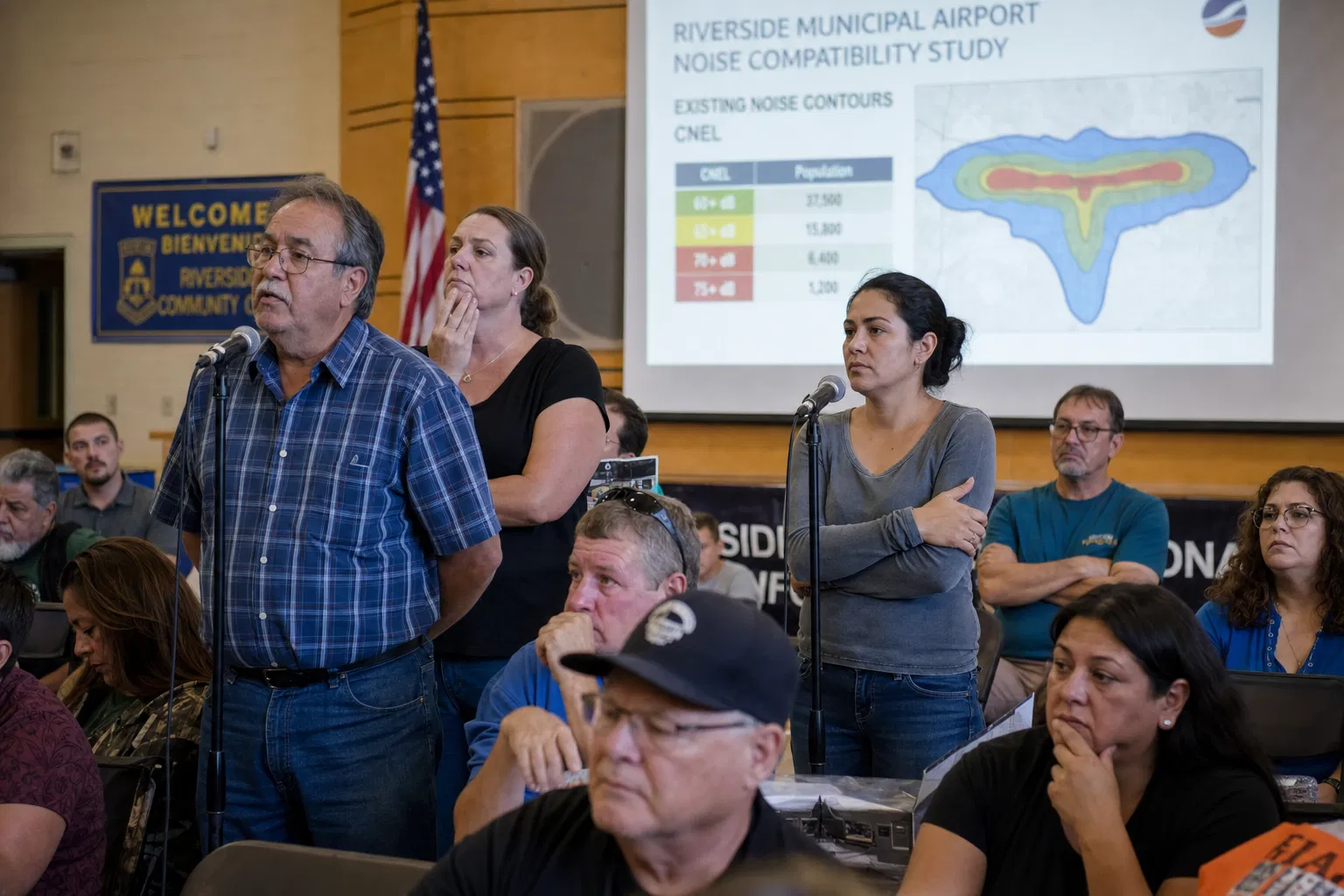
"The democratic process where my voice is supposed to matter has been hijacked by big tech."
U.S. News
'Living in Hell': Data Center Neighbors Grapple With Noise, Air Pollution
Apr 28, 2026
EESI
Communities Raising Noise Pollution Concerns About Data Centers
Mar 23, 2026
NBC Washington
Amid 'Constant' Noise, Sterling Residents Worry About Health
Apr 15, 2026
Harvard Gazette
Why Are Communities Pushing Back Against Data Centers?
Apr 9, 2026
NPR
Why More Residents Are Saying 'No' to AI Data Centers
Jul 17, 2025
Sierra Club
Data Centers & Noise Pollution: Ohio Communities Organizing
Feb 2026
What Can You Do?
Educate Yourself and Your Neighbors
Share this website. Print the key facts. Host a neighborhood meeting. Make sure everyone understands what's at stake.
Demand Proper Noise Testing
Demand octave-band analysis — not just dBA readings. Request dBC and dBZ measurements, especially at night. Reference ISO 1996 and ANSI S12.
Request Water Quality Testing
Ask your local water authority to test for PFAS contamination. Demand disclosure of all chemicals used in cooling systems.
Attend Town Hall Meetings
Show up. Bring your neighbors. Ask about water consumption, diesel emissions, noise levels, and tax subsidies. Record everything.
Contact Your Representatives
Support bills that impose moratoriums, require transparency, and end tax subsidies. In Michigan, support the Data Center Public Health & Decommissioning Act.
Document Everything
Keep a log of noise, vibration, health symptoms, and property damage. Take video. This is critical evidence for legal action.
Michigan District 78
The Data Center Public Health & Decommissioning Act
Kaleb Hudson, candidate for Michigan State Representative (District 78), has drafted landmark legislation to protect Michigan communities from data center harms.
Key Provisions
- Prohibits construction and planning of new data centers in Michigan
- Declares existing hyperscale data centers a public health nuisance
- Requires decommissioning of facilities that violate water and air standards
- Fines up to $1,000,000 per day for violators
- Repeals existing data center tax exemptions
- Bans NDAs related to data center development
- Grants every Michigan resident the right to sue to enforce the act
HB 5594-6
Bipartisan bills to ban new data center construction
51 Moratoriums
1,500 sq miles of Michigan protected
Detroit Council
Voted 6-2 for moratorium, March 2026
The Bottom Line
If a data center is proposed near your property, you need to understand what's coming: 24/7 noise that penetrates your walls, toxic chemicals contaminating your water, diesel exhaust in your air, rising electricity bills, and a facility that employs fewer people than a single restaurant.
The science is clear. The communities that have fought back are winning. And legislation is being drafted right now to protect you.
Don't wait until the hum starts. By then, it's already too late.
Downloadable Resources
Print these out. Bring them to town halls. Share them with your neighbors. Arm your community with the facts.
KMK Data Center Health Crisis Flyer
3-page shareable flyer covering diesel emissions, PFAS contamination, noise pollution, heat islands, and water depletion. Perfect for community distribution.
Download PDF →America's Data Center Crisis — Full Report
23-page comprehensive report covering energy consumption, water crisis, Great Lakes threat, heat islands, economic illusion, NDA scandals, surveillance, and community resistance.
Download PDF →Top 10 Facts — Town Hall Handout
One-page printable fact sheet with the 10 most critical stats. Designed for town hall meetings, community events, and neighbor-to-neighbor sharing.
Download PDF →